

Sam Phillips drives around Lancashire's backroads in his small van, the back of it cluttered with tubs and spoons for water testing. On a sunny summer's day he pulls in at Longton Brook, walks a couple of minutes down to the stream and scoops the water into a bottle. Tinkering in the back of the van, he labels up two samples from every site. One goes off to a lab and the other he tests himself at Groundwork, the Wigan-based environmental charity he works for.
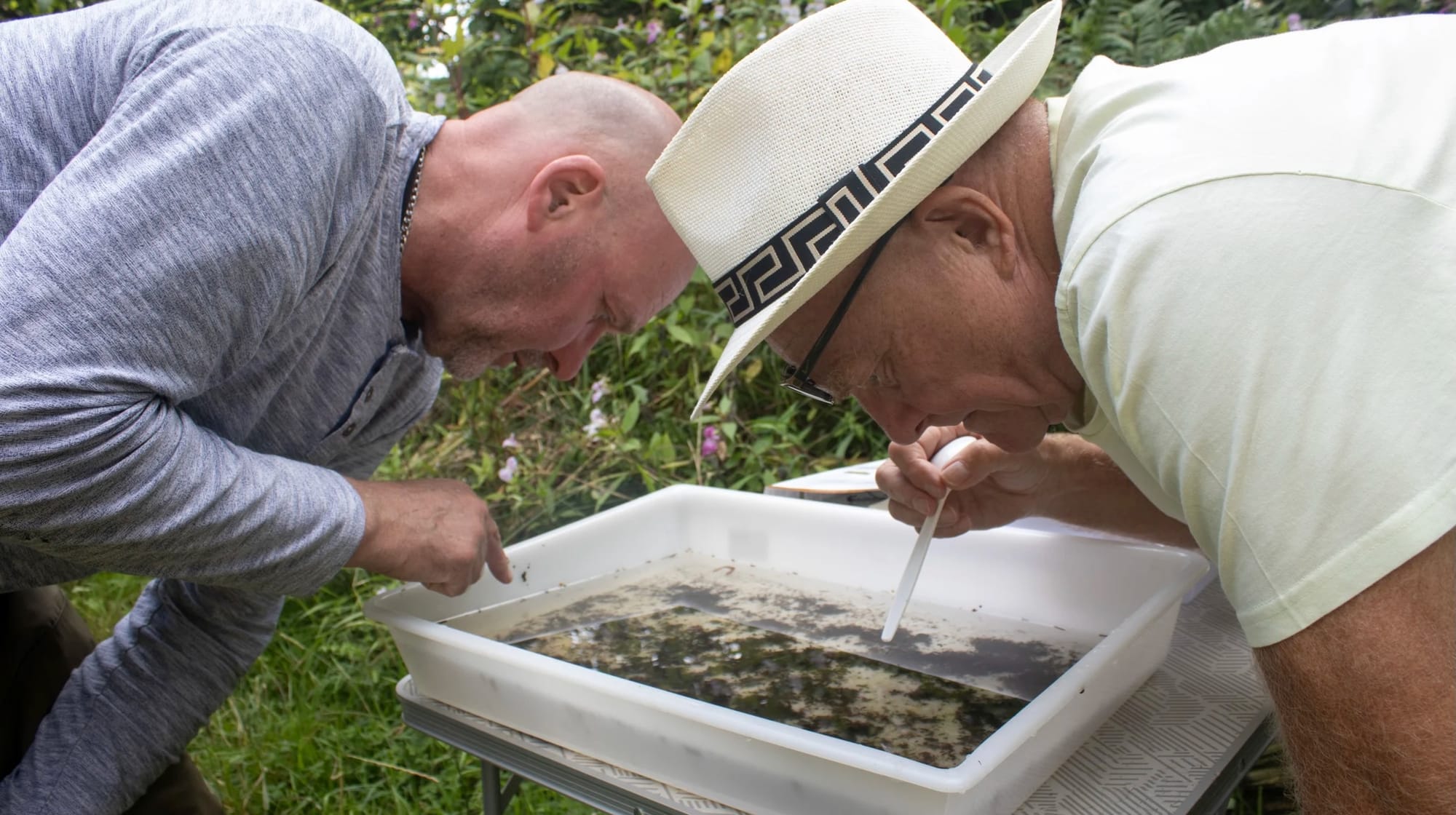
Sam does this mostly in the winter, once or twice a week, whatever the weather, testing for pollution and pathogens including E. coli. It's mundane work, but without it nobody would have a detailed picture of how healthy the river is.
Parts of the River Douglas fall short of the Environment Agency’s benchmark for good ecological status. The Environment Agency's latest data, published in 2026, shows just 14.3% of England's surface waters reached good ecological status.
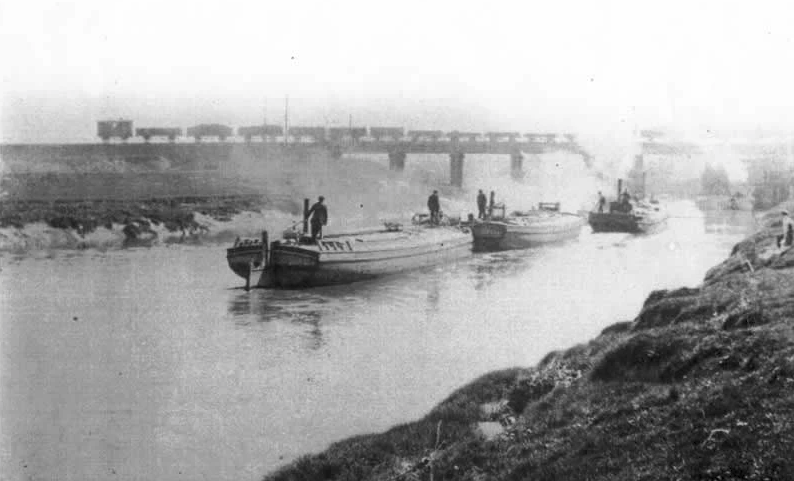
The River Douglas runs from Winter Hill in the West Pennine Moors down to the Ribble estuary, where it meets the sea. More than 800,000 people live along it and its streams.
In the Industrial Revolution, it was used to move coal, while mines, print and bleach works poured their waste into it.
The mines closed a long time ago, but minewater still seeps into the Douglas, along with today's pollution from towns, roads, farms and sewage.
Now a growing network of charities and volunteers are testing the water and tracing pollution back to where it comes from.
Pictured: Shipping on the River Douglas around 1900, with the viaduct that carried the old Southport–Preston railway in the background.
Sewage spills and run-off from farmland, towns and roads can all affect rivers like the Douglas. The catchment also bears the marks of its industrial past, with old mine workings and weirs that interrupt the river’s flow.
The state of Britain's rivers, and sewage in particular, has become a national news story, and this year Channel 4's drama Dirty Business brought it to a much bigger audience.
More people now want to know what's going on in their own local river, and more are training up as citizen scientists.
This is where people like Sam come in. Lab testing is precise, but it takes time and costs a lot. Local people can be trained in simple, cheap methods that cover a lot of ground and raise the alarm quickly if they spot a problem.
"You'd never be able to monitor a catchment worth of rivers or streams or tributaries if it wasn't for the volunteers getting involved." – Sam Phillips, Groundwork CLM
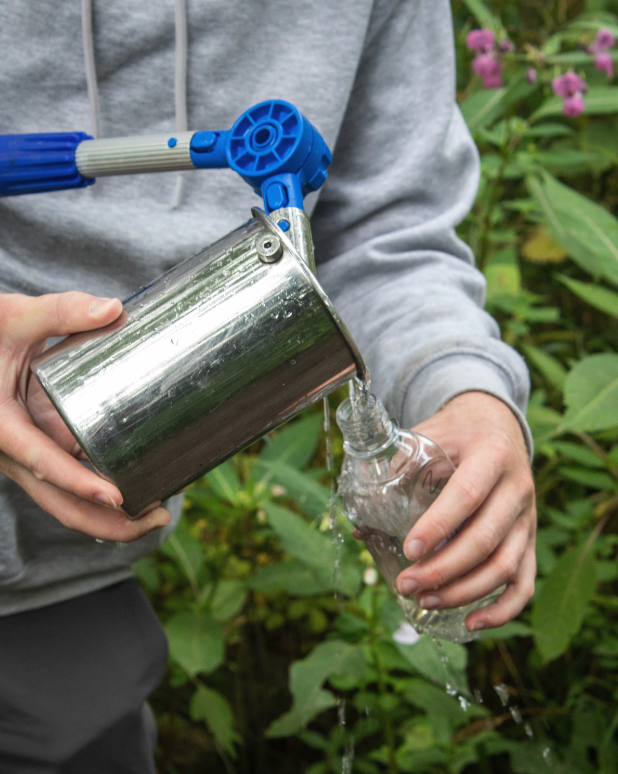
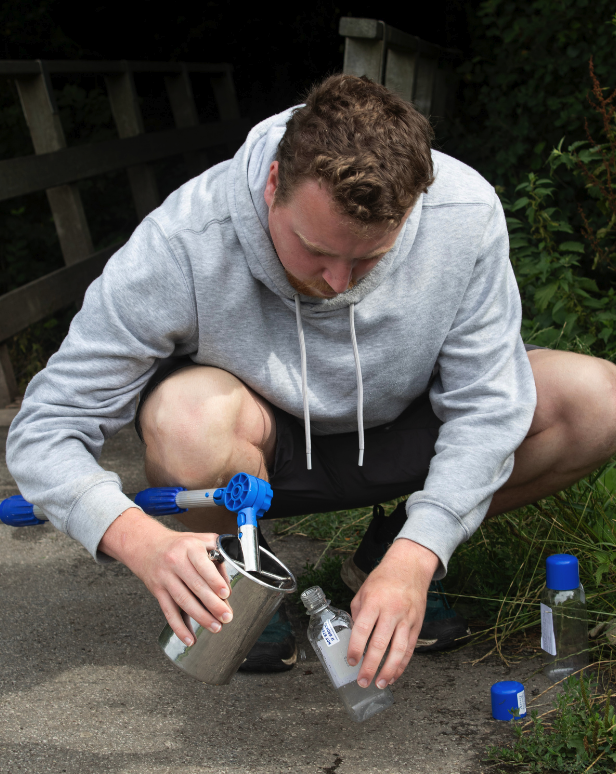
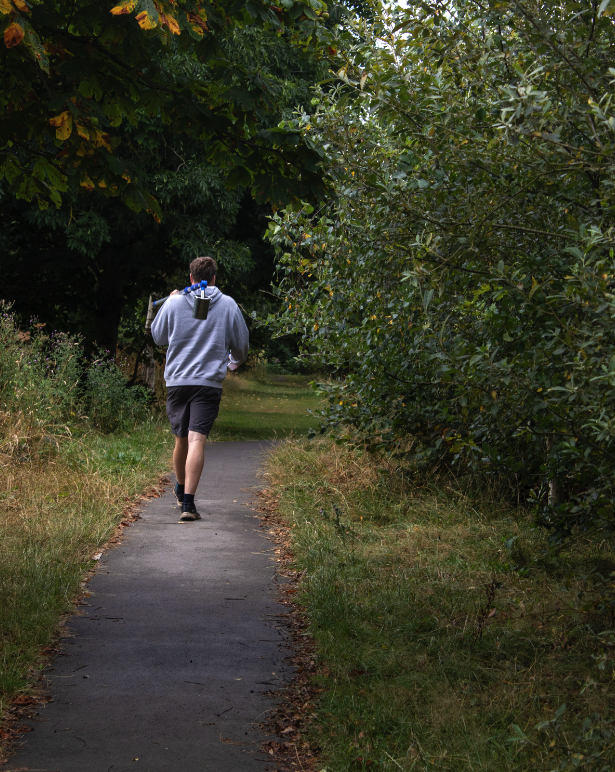
Sam taking samples at Longton Brook | August 2026
Sam, who is also a Riverfly Tutor and an Extended Riverfly Tutor, grew up in Wigan and says he's always wanted to work around rivers. He is also the Riverfly monitoring coordinator for the Douglas catchment. Riverfly is a citizen science scheme run by the Riverfly Partnership that trains volunteers to keep track of water quality and spot pollution in their local rivers.
Through Groundwork's Love My River programme he trains volunteers and community groups to monitor the river themselves, and he has helped link up groups that he says "were just isolated before."
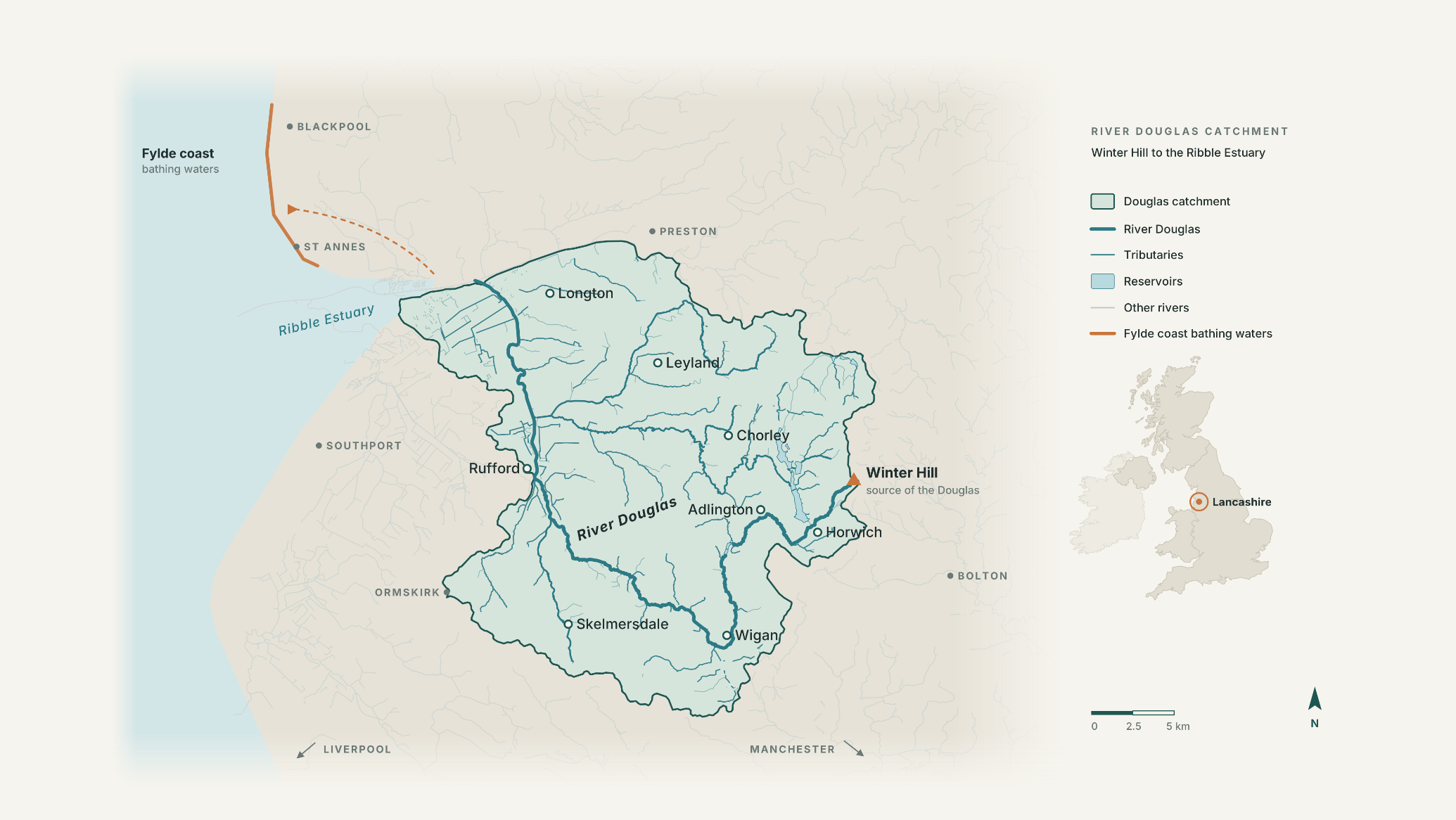
📍Winter Hill, Rivington
The Douglas starts here, up on the West Pennine Moors.
📍Paddy Kenny's Ford and Duxbury Woods, Adlington
Environment Times' editor Duncan Ashcroft samples the river here near his Pollinator and Waterlife Project.
📍Smithy Brook, Wigan
In 2022 Riverfly volunteers reported finding dead fish and invertebrates.
📍Tawd Valley, Skelmersdale
Volunteer data helped get a Weir taken out, opening up one to two miles of river for fish.
📍Longton Brook
Sam's hunt for E. coli for Turning the Tide started at Tara Carr but nearby Longton Brook is his current focus.
📍Ribble estuary and the Fylde coast
Where the Douglas meets the sea.
What's in the water
Two local dog walkers by the Wigan Flashes, lakes close to the Douglas created by old mine works, have different memories of the area. For one, the Flashes were a childhood "playground” growing up. The other remembers “the amount of stuff they used to empty straight into the Dougie (...) and it stunk.”

